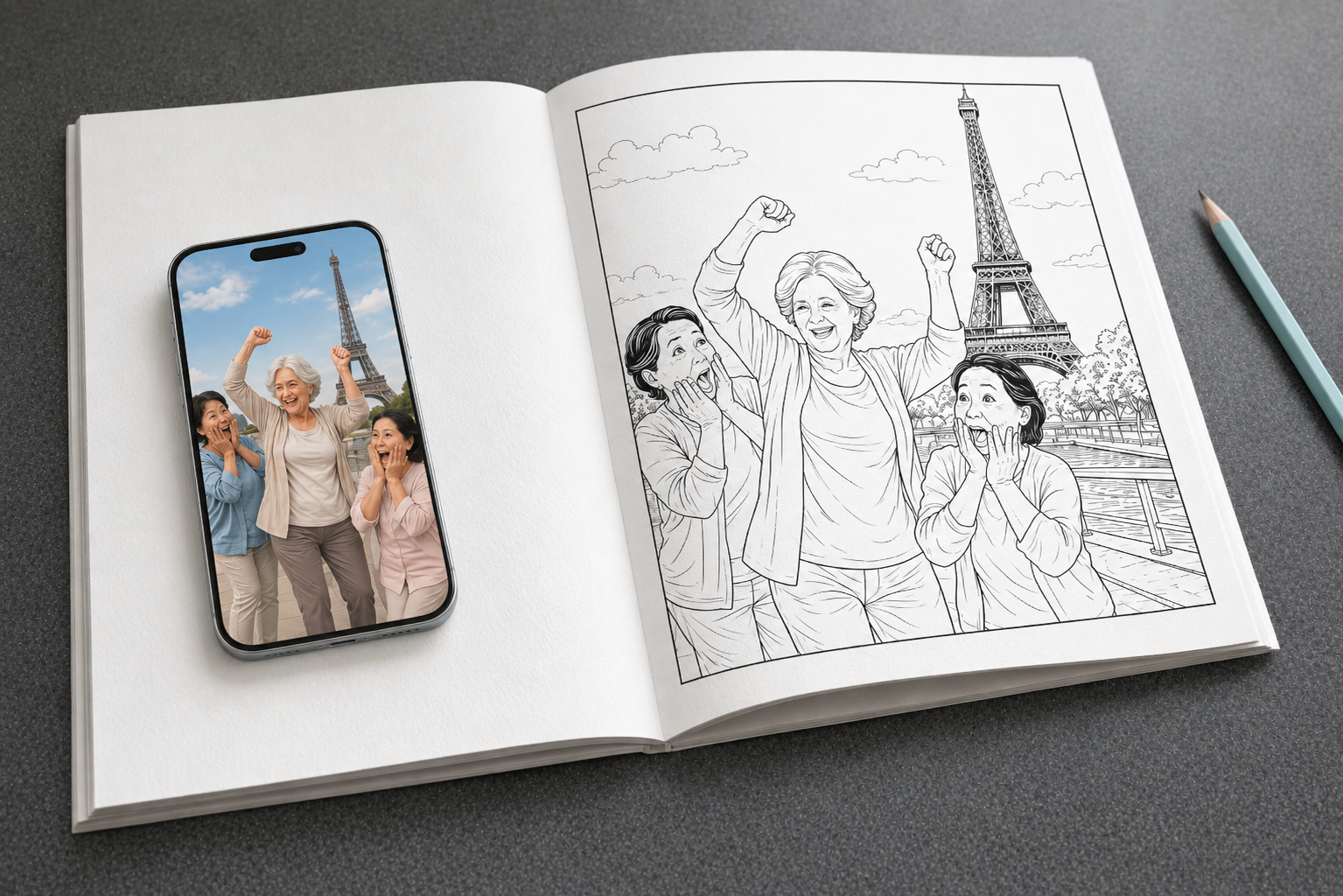
A Gentle Tool for Children Navigating Difficult Times

Childhood should be carefree, but life doesn't always cooperate. Family separation, bereavement, illness, moving home - children experience these things in ways they often can't put into words.
Professional support matters most, but everyday tools help too. Activities that offer structure and calm can make a real difference. A personalised colouring book can be one of those tools.
At EverFold, we've heard from parents, carers, and therapists who've found that colouring - especially with familiar, comforting images - helps children find moments of peace during difficult times.
Why Colouring Supports Emotional Wellbeing
Colouring isn't just a distraction. It's a gentle, screen-free activity that engages the mind without overwhelming it.
- Grounding in the present: The simple act of choosing a colour and filling a space anchors attention to the here and now, offering respite from anxious thoughts.
- Safe expression: For children who struggle to talk about feelings, colouring provides a non-verbal outlet. The colours they choose, the pressure they apply - it all communicates something.
- Predictable structure: When life feels chaotic, the clear boundaries of a colouring page offer reassuring order. There are edges, there are rules, and the child is in control.
- A sense of completion: Finishing a page provides a small but meaningful achievement - something they can point to and say, "I did that."
The Power of Familiar Faces
Generic colouring books have their place, but personalised books offer something deeper: connection.
When a child is going through upheaval - separated from a parent, grieving a loved one, adjusting to a new home - seeing familiar faces helps.
A link to stability: A colouring page of their beloved pet, their grandparent, or a happy memory from before the change can serve as a visual anchor to what remains constant.
Processing through repetition: Children often return to the same images again and again. Colouring the same photo multiple times isn't boredom - it's processing. Each pass helps them integrate the memory or emotion.
Building a narrative: For children in foster care or adoption, a book of their life story - photos from different stages - can help them piece together their own history in a gentle, creative way.
Teaching Patience and Observation
Trauma often leaves children feeling rushed, reactive, or hypervigilant. Colouring teaches the opposite.
Patience: Filling in a detailed page takes time. There's no shortcut. This slow, deliberate process teaches children that not everything needs to be rushed, and that careful work brings satisfaction.
Observation: To colour well, you need to look closely. What details are in this picture? Where do the shadows fall? This practice of noticing builds focus and helps children become more attuned to the world around them - and to themselves.
Self-regulation: The repetitive motion of colouring has a calming, almost meditative quality. It helps regulate the nervous system, much like deep breathing or gentle rocking.
A Tool, Not a Fix
It's important to be clear: a colouring book is not therapy. It won't replace professional support, and it won't "fix" trauma.
But it can be part of a caring toolkit. It's something a child can do when they need a break. It's something a parent or carer can sit alongside them with, offering quiet companionship without pressure to talk.
It's portable, affordable, and doesn't require batteries or Wi-Fi. It works in waiting rooms, at bedtime, on difficult days, or simply when a child needs something familiar to hold onto.
Creating a Book with Care
If you're creating a book for a child going through a hard time, think carefully about the images you choose.
- Choose comfort over excitement: Photos of safe people, safe places, beloved pets, or happy memories work better than overstimulating or unfamiliar images.
- Include the child: Seeing themselves in the book validates their experience and reminds them they matter.
- Keep it simple: You don't need 50 pages. Even a small book of 10-15 meaningful images can be deeply valuable.
A Small Kindness
In difficult times, small acts of care matter. A personalised colouring book says: "I see you. I know this is hard. Here's something just for you."
Create a personalised book today - a gentle companion for a child who needs one.
About the Author
Dr Jon Baker is the CEO and founder of EverFold. With a PhD in Electronics Engineering and 15 years of experience building software, Jon has combined his technical expertise with a passion for creating innovative products. He created EverFold to make it easy for anyone to transform their photos into beautiful, professionally printed colouring books.